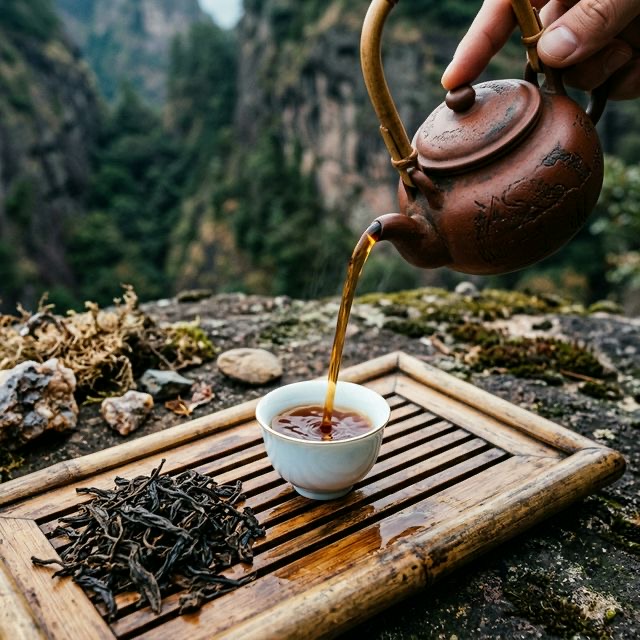
Lapsang Souchong
China · Wuyi Mountains, Fujian

Quick Brewing Summary
Water Temperature
100°C
212°F
Steep Time
3:00
min:sec
Water Amount
200 ml
7 oz
Leaf Amount
4 g
2 tsp
What Is Lapsang Souchong?
Lapsang Souchong (Zheng Shan Xiao Zhong in Chinese) holds a singular distinction in the world of tea: it is widely regarded as the first black tea ever produced. Originating in the Wuyi Mountains of Fujian Province, this tea is famous for its intense smoky aroma, achieved by drying the leaves over smoldering pine wood fires. For those who love it, Lapsang Souchong is an unforgettable sensory experience. For newcomers, it can be polarizing — but the depth and complexity beneath the smoke reward anyone willing to explore.
Origin and History
The story of Lapsang Souchong begins in the village of Tongmu, nestled deep within the Wuyi Mountain Nature Reserve at elevations above 1,000 meters. Legend dates its creation to the late Ming Dynasty (around the 17th century), when soldiers reportedly occupied a tea factory during a conflict, delaying the normal processing of freshly picked leaves. To salvage the wilting harvest, the tea makers hastily dried the leaves over pine fires, producing an unexpectedly robust and smoky tea. Dutch and British traders quickly developed a taste for this unusual product, and it became one of the earliest Chinese teas exported to Europe, where it contributed to the Western world's enduring love affair with black tea.
Production
Authentic Lapsang Souchong is made from larger, more mature leaves — the term "souchong" refers to the fourth and fifth leaves on a tea branch, which are coarser than the tender buds used for premium white or green teas. After picking, the leaves are withered over pine fires, fully oxidized through rolling and resting, and then given a final drying over smoldering pine (traditionally Masson pine, Pinus massoniana). This smoking step is what sets Lapsang Souchong apart from every other black tea. Some producers perform a lighter smoke for a more nuanced cup, while heavily smoked versions deliver a campfire-forward intensity.
Flavor Profile
The first impression is unmistakably smoky — think a well-aged scotch whisky, a crackling pine campfire, or smoked meat. Beneath that dramatic top note, a well-made Lapsang Souchong reveals layers of complexity: dried longan fruit, dark caramel, a resinous pine sweetness, and a subtle mineral quality inherited from the Wuyi terroir. The mouthfeel is full and smooth, with very little astringency compared to other black teas. Higher-grade versions, particularly those from the original Tongmu village, balance the smoke with a natural sweetness that lingers on the palate.
Caffeine Content
Lapsang Souchong contains a moderate level of caffeine, roughly 25 to 40 milligrams per cup. This is comparable to most other Chinese black teas and well below the caffeine content of a cup of coffee. The mature leaves used in production naturally contain less caffeine than young buds and tips, contributing to the tea's relatively gentle energy.
How to Enjoy Lapsang Souchong
This tea is best enjoyed black, without milk or sugar, to fully appreciate its smoky depth. However, some drinkers enjoy it with a splash of milk, which softens the smoke and brings out the tea's underlying sweetness. Lapsang Souchong pairs exceptionally well with savory foods: try it alongside smoked salmon, grilled meats, aged cheddar, or a hearty breakfast. It has also found a following among whisky enthusiasts, who appreciate the shared flavor vocabulary of peat, smoke, and wood. Serve it in a generous mug on a cold evening, and you have one of the most atmospheric teas in existence.
Health Benefits
- Contains antioxidants that support cellular health
- May aid digestion after heavy meals
- Provides steady, moderate caffeine energy
- Rich in polyphenols linked to cardiovascular health
Brew this tea with Steep
Get precise brewing timers, temperature guides, and multi-steep support for Lapsang Souchong and dozens more teas.
App Store