Kukicha Tea: Taste, Caffeine, and How to Brew It Well
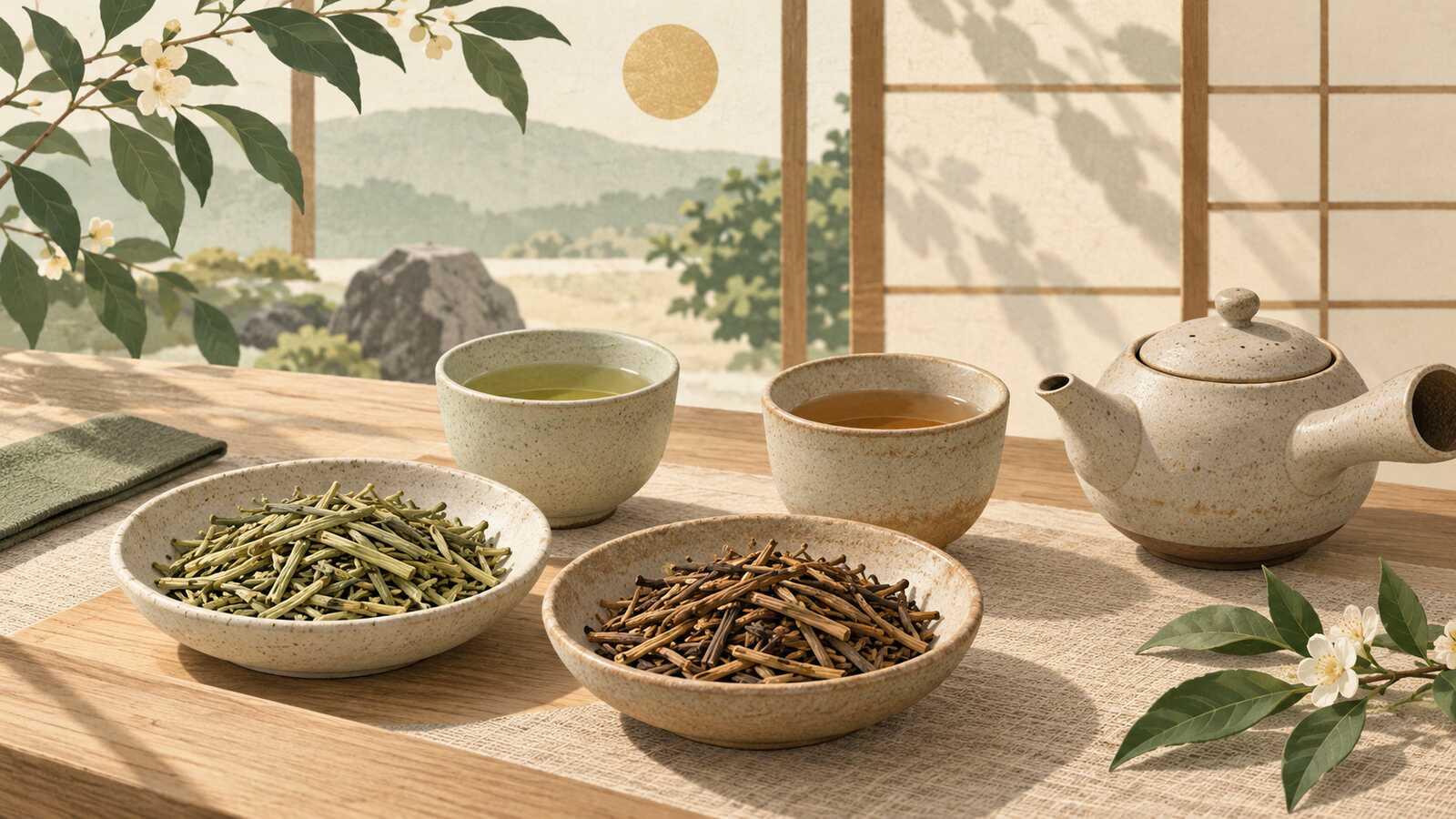
Open a packet of kukicha and you may wonder whether someone sent you the stems left at the bottom of a tea tin. That is close to the point. Kukicha is made primarily from the stems and twigs of the tea plant, yet it is a finished tea in its own right. Brew it carefully and the cup can taste light, sweet, and quietly vegetal. Roast those stems and you get a very different, toastier drink.
The name on a packet does not tell you everything you need to make the first cup. An unroasted green kukicha and a roasted stem hojicha call for different water and time. Caffeine varies, too. Start by identifying which tea you have, follow its producer's instructions, and then change one brewing variable at a time to suit your taste.
What is kukicha made from?
Kukicha means stem tea. Sugimoto Tea's kukicha is made from tender stems selected while refining sencha. Its producer describes a gentle sweetness, subtle umami, and a light floral aroma. A packet may include stems of different lengths and shades; the material in the infuser looks unlike the curled or needle-shaped leaves you might expect from Japanese green tea.
The useful distinction is the part of the plant. Sencha is a leaf-focused tea. Kukicha puts stems in the foreground. Both can be prepared as green tea, but a green stem blend should not be treated as a pile of inferior sencha. It is chosen and sold for a different cup. If you want the leaf side of the comparison, our sencha guide explains that style on its own terms.
Green kukicha and roasted stem tea
Sugimoto explicitly describes its kukicha as unroasted, steamed and processed in a way similar to sencha. The brewed cup is light, with a fresh vegetal side and a soft sweetness. Harney & Sons' kukicha is another unroasted stems-and-twigs tea; the seller describes a light green liquor with vegetal and woody notes. Those are tasting descriptions from two individual products, not a guarantee that every kukicha tastes identical.
For a roasted example, Ippodo's Stems Hojicha is made from roasted green tea stems. Its cup is amber rather than pale green, and Ippodo describes a round, crisp, roasted flavor. The stems do not stop being stems when they are roasted. The word hojicha tells you that roasting is the defining step; kukicha tells you which plant material is in the cup. A product can therefore be a roasted stem tea without being interchangeable with an unroasted green kukicha.
This matters at the kettle. Sugimoto advises below-boiling water for its green kukicha because hotter water can bring out too much bitterness and astringency. Ippodo recommends boiling water for its roasted stems hojicha. Both instructions make sense for the teas their makers sell. Neither should be copied as a universal rule for every packet marked "stem tea." Our hojicha guide covers roasted tea in more detail.
How much caffeine is in kukicha?
Kukicha contains caffeine. Harney labels its unroasted product caffeinated, and Sugimoto says the same of its own. This is the safest starting point if you are choosing a tea for late afternoon: do not assume that a stem-based tea is caffeine-free.
The amount in a cup is harder to generalize. Sugimoto reports a laboratory result for one serving of its own kukicha prepared according to its own recommended recipe. It also warns that the amount can change with water temperature, steeping time, tea-to-water ratio, and the amount of tea used. A different stem blend in a different-sized mug is not that tested serving. Repeating one producer's milligrams as "the caffeine in kukicha" would give a false sense of precision.
Some sellers describe stem tea as lower in caffeine than leaf tea. That is a description of their products, not a promise about every blend or every cup you make. If you are highly sensitive to caffeine, the practical choice is to treat kukicha as a caffeinated tea, keep your serving and timing modest, and use the information on the particular packet. Roasting does not make a tea automatically caffeine-free either. The same caution applies to the comparison in hojicha vs matcha: cup size and preparation belong in any caffeine claim.
Brew the tea that is actually in your packet
Begin with the producer's directions. Measure the tea and water, set a timer, and pour all the tea out at the end. Those steps make the second attempt informative. If you change the tea amount, water temperature, and time all at once, you will not know which change improved the cup.
Here are three product-specific starting points from the makers, not a single kukicha recipe:
| Tea | Maker's preparation | What it is |
|---|---|---|
| Harney & Sons Kukicha | 160°F, about 71°C, for 1–2 minutes | Unroasted green stem tea |
| Sugimoto Kukicha cold brew | 5 g tea in 350 ml ice water for 10–15 minutes | Unroasted green stem tea |
| Ippodo Stems Hojicha | 10 g tea in 240 ml water at 100°C for 30 seconds | Roasted stems hojicha |
Notice how different the recipes are. Ippodo uses more tea, hotter water, and a very short brew for its roasted product. Harney uses cooler water and a longer window for its green kukicha. Sugimoto's published cold-water recipe is a separate way to explore its tea, not an instruction to put every kukicha into ice water for the same time.
For an unroasted hot cup, use the directions that came with your tea. If there are none, Harney's recipe is a reasonable labeled example to test with a similar green stem tea: use a small pot or infuser, water around 71°C, and taste at one minute before deciding whether to continue. That is an experiment in your kitchen, not a recommendation from Harney for another company's product. If the tea tastes thin, try a little more tea or a slightly longer steep next time. If it tastes harsh, shorten the steep or let the water cool more before pouring. Record the result so the next cup moves in one direction.
For roasted stems, start with the roasted product's own instructions. If you have Ippodo's Stems Hojicha, prepare its measured amount with boiling water and pour at 30 seconds. A mild first cup can be brewed a little longer on the next attempt if you prefer, but keep that adjustment tied to your own packet and palate. The key is to avoid borrowing a green kukicha temperature merely because both teas contain stems.
A first-cup tasting exercise
Use the same cup and water source for two attempts. On the first, follow the packet exactly and write down three simple observations: aroma before drinking, first taste, and finish after swallowing. "Fresh, lightly sweet, short finish" is a useful note. So is "toasty, fuller, a little drying." You do not need a tasting wheel.
On the second attempt, change one variable. If the green kukicha was too sharp, cool the water more or reduce steep time, while leaving the dose alone. If the roasted stem tea felt weak, keep the temperature and tea amount the same but extend the steep slightly. Taste side by side if you can. The point is not to land on a magical number, but to learn how your particular tea responds.
Choosing kukicha, hojicha, or sencha
Choose green kukicha if you want a delicate stem-led cup and enjoy making small adjustments to water temperature. The taste may be sweet, vegetal, woody, or floral depending on the blend. Check the packet before assuming it behaves like the last kukicha you drank.
Choose roasted stem hojicha if you want a toasted aroma and a darker cup. Look for "roasted stems," "stems hojicha," or an equivalent description. The roasting is more useful information for brewing than the mere presence of stems.
Choose sencha if you want the leaf-focused Japanese green tea reference point. Make one cup of sencha and one of green kukicha using each maker's directions. This small comparison teaches more than ranking the teas in advance: the same broad family can yield very different aromas and textures.
Frequently asked questions
Is kukicha the same as hojicha?
Not necessarily. Kukicha describes stem-based tea; hojicha describes tea that has been roasted. Sugimoto's kukicha is unroasted green tea, while Ippodo's Stems Hojicha uses roasted stems. Read the processing and brewing directions on the product you bought.
Does kukicha have caffeine?
Yes. The unroasted products from Sugimoto and Harney are caffeinated. The amount in your cup depends on the tea and preparation, so a single number for all kukicha would be misleading.
Can I use boiling water for kukicha?
Follow the packet. Sugimoto recommends below-boiling water for its green kukicha; Ippodo recommends boiling water for its roasted stems hojicha. The category name alone does not settle the temperature.
Can I cold-brew kukicha?
Yes, at least for products whose makers give a cold-brew method. Sugimoto provides one for its kukicha using ice water. Use its measurements for that product, then adjust only after tasting.
Why does my kukicha taste bitter or weak?
Start by checking whether your tea is roasted and comparing your method with the packet. For green kukicha, too-hot water or a long steep may make the cup harsh; a short steep or too little tea may taste faint. Change one variable on the next brew and keep a note.
Your first packet, without guesswork
Read the label for stems, roasted or unroasted, and producer instructions. Make the first cup as directed. Note the result. If you want to change it, choose one adjustment and brew again. Those few steps are more useful than a supposed universal kukicha temperature or caffeine number.
If you like repeating a good cup, Steep can hold a custom timer for that packet's brew. Name it for the tea and the method, especially if you keep both green kukicha and roasted stems on the shelf. Then the next cup starts from something you actually tasted, not a rule meant for somebody else's tea.
Related Articles
Hojicha vs Matcha: Taste, Caffeine, and Which to Choose
Hojicha vs matcha, compared on taste, caffeine, theanine, and grades with Japan's official food data. Hojicha has less caffeine than matcha, but far from none.

Sencha vs Gyokuro: Which Japanese Green Tea Should You Choose?
Choose sencha or gyokuro by taste, serving style, brewing attention, and value. Compare everyday freshness with concentrated umami without health promises.

Matcha vs Green Tea: Caffeine, Health Benefits, Taste, and Which One to Drink
Matcha and green tea come from the same plant, but matcha is shaded, ground, and drunk whole. What that changes in caffeine, L-theanine, EGCG, taste, and price.