Sobacha Buckwheat Tea: How to Brew It Hot or Over Ice
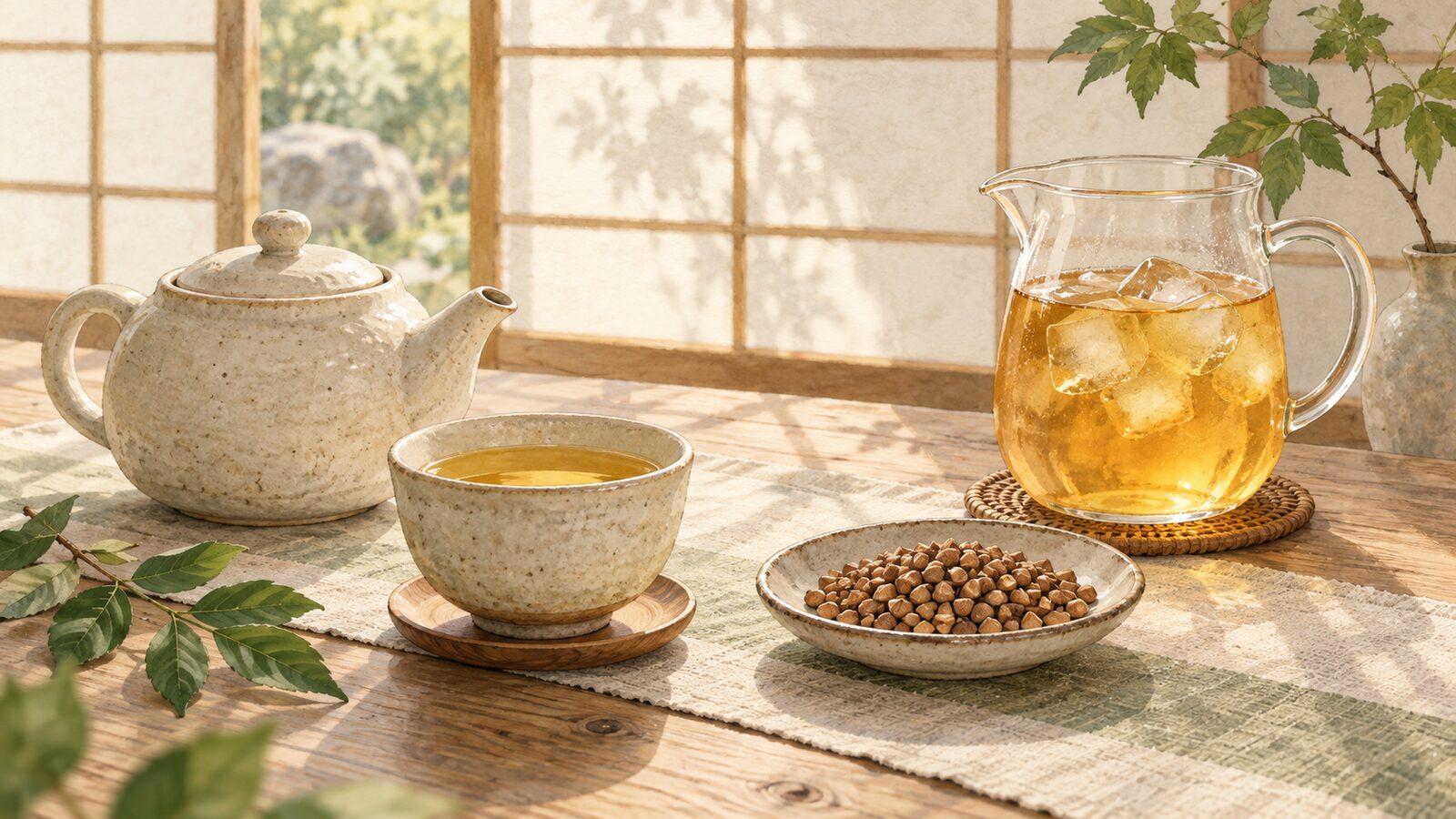
A packet labeled sobacha can look like a bag of tiny grains rather than tea leaves. Put those roasted grains in hot water and the cup smells toasted and nutty. That is the basic pleasure of buckwheat tea. The details on the packet matter, though: some products contain only roasted buckwheat, while a blend may add green or other tea leaves. The ingredient list decides what you are brewing.
This guide gives a measured first cup, a larger iced preparation, and a way to adjust either without guessing. It also explains why a pure sobacha drink is different from mugicha, roasted barley tea, and why an allergy check belongs before the kettle goes on. Two Japanese tea sellers supply the numbers, and where their recipes differ, both are given.
What is sobacha?
Sobacha is an infusion made from roasted buckwheat. Yunomi's explanation of soba tea describes products made from regular buckwheat and from Dattan buckwheat and gives separate quantities for each. Dattan is the Japanese name for tartary buckwheat, a related species with smaller, more bitter grains; tea made from it is sold in Japan as dattan soba-cha. The roasted grains are steeped or simmered in water, then strained. The packet may show whole-looking grains, smaller pieces, or a bag filled with roasted material. Check what the seller actually packed before copying a recipe.
The word tea here describes the drink, not necessarily a leaf from the tea plant. Senbird's pure sobacha product is made from roasted Dattan buckwheat grown in Hokkaido and is sold as caffeine-free. The seller describes its cup as nutty and roasted. Another brand's roast can taste quite different, so read that as a description of this product.
If the ingredients add green tea, black tea, or another leaf tea, the drink is a blend. Do not transfer the pure-grain caffeine description to that blend. Read the full ingredients even if the front of the bag says “buckwheat tea.” This one check tells you whether the bag is a roasted-grain infusion, a leaf-tea blend, or something else that needs its own directions.
Choose roasted tea grains, then read the label
Look for a product sold for brewing, with roasted buckwheat named in the ingredients. A bag of raw cooking buckwheat is a different starting material. It may be useful for food, but it will not reproduce a maker's recipe for roasted sobacha. Nor should the amount in a tea recipe be copied blindly onto a sweetened bottled drink or a blend with multiple ingredients.
When comparing two bags, check four things: the ingredient list, whether the buckwheat is roasted, whether the maker identifies regular or Dattan buckwheat, and any brew instructions. Yunomi uses different amounts for regular and Dattan in both hot and iced methods. That is a reason to read the label, not to assume one category is stronger in every producer's product.
A package with its own method deserves the first test. Use the maker's water volume and timing once, note what you taste, then change one variable if needed. If the bag gives no directions, the labeled Yunomi examples below offer a measured experiment. You can decide whether that ratio suits your particular grains.
How to make one hot cup
For its sobacha brewing guide, Yunomi suggests one tablespoon of regular roasted buckwheat per 300 ml of boiling water, steeped for two to three minutes. For its Dattan buckwheat, the suggested amount is half a tablespoon per 300 ml, with the same water and time. Senbird's Dattan uses much more: one tablespoon per 8 US fl oz (about 240 ml) of water at 95°C (203°F), steeped for three to five minutes. Two sellers, two ratios for the same kind of grain, which is why the directions on your own bag come first. A tablespoon is a volume measure, so its weight can differ with grain size and packaging.
To make the regular-buckwheat version repeatable:
- Measure 300 ml of water into a kettle and bring it to a boil. Check that your cup or pot has room for the water and grains.
- Put one tablespoon of roasted regular buckwheat into a heat-safe infuser or small pot. If your packet calls it Dattan, begin with the supplier's half-tablespoon amount instead.
- Pour in the boiling water and start a two-minute timer. At two minutes, taste a small spoonful if practical; let it reach three minutes if you want to test the longer end.
- Strain the grains completely into a cup. Leaving them in the liquid while you drink makes the actual steep longer than the one you timed.
- Write down the product name, amount, 300 ml water, time, and one plain tasting note such as “light roast” or “too thin.”
The measured first cup gives you a baseline. If it is too light, try three minutes next time while keeping the amount and water volume the same. If it is too strong for your taste, try two minutes or a little less grain on a separate attempt. Changing time and dose together makes it harder to learn which change mattered. Tea Timer can time the interval you choose; keep the packet name with your notes so two buckwheat products do not share an unlabeled recipe.
Make sobacha over ice
Yunomi also gives a larger hot-prepared iced method: three tablespoons of regular buckwheat, or two tablespoons of Dattan buckwheat, in one liter of boiling water; simmer for three minutes. This is a separate pitcher recipe, not the hot-cup ratio multiplied without thought. Use the version that matches your grains.
For a pitcher, add the measured roasted grains to a pot with one liter of boiling water, simmer for three minutes, and strain. Let the strained drink cool safely, then refrigerate it promptly in a clean covered container. Serve it over ice once chilled. If you pour it straight over a lot of ice, dilution may make it seem lighter; taste before changing the amount of grain in your next batch.
Yunomi gives no fridge life for the pitcher. Senbird says its iced sobacha keeps two to three days in the fridge; treat that as an outer limit and make an amount you will finish within it. Do not leave a warm pitcher at room temperature overnight and call that an iced-brew method. A refrigerated, covered pitcher is the controlled way to make a cold drink.
Fridge-steeped option. Senbird's iced method skips the pot. Put the grains in a heat-safe brew bottle or pitcher, pour water at about 95°C (203°F) over them, and let the bottle steep in the fridge for one hour before drinking. The water starts hot, so this is not a cold-water brew, but the hour in the fridge finishes the steeping and chills the drink at the same time. Use Senbird's hot ratio, one tablespoon per 240 ml, and strain the grains after the hour so the pitcher does not keep getting stronger.
If you prefer only one glass, brew a hot cup and pour it over ice after straining. Expect dilution: melting ice adds water, so a cup steeped at the long end of its range holds up better. If it still tastes weak, adjust on the next cup; a brief tasting note will tell you whether your own version worked.
Sobacha versus mugicha and kukicha
These three names may sit beside each other in a shop, but they describe different ingredients. Sobacha is brewed from roasted buckwheat. Mugicha is brewed from roasted barley; our mugicha guide covers its hot and cold preparations. Kukicha is made primarily from stems and stalks of the tea plant; it can be green or roasted, as the kukicha guide explains.
That ingredient distinction matters for caffeine. A pure roasted-buckwheat product such as Senbird's does not contain tea leaves and is marketed as caffeine-free. A kukicha contains tea-plant material and should be treated as caffeinated. A sobacha blend with green or black tea also contains tea leaves, so do not describe it as caffeine-free merely because “sobacha” is in the name. For a precise caffeine figure, the specific product and preparation would need evidence; a category label cannot supply milligrams per cup.
Flavor is a separate reason to compare them. Senbird describes its sobacha as nutty and roasted. Mugicha's roast comes from barley, while a roasted kukicha still carries tea-plant character. Buy small amounts if you can, follow each packet once, and write down which cup you actually prefer. There is no useful universal ranking of these drinks.
Allergy and blend checks
Buckwheat is one of the food allergens most likely to cause a severe reaction. Japan's Consumer Affairs Agency food-labeling material puts it on the short list of ingredients that must be declared on packaged food, chosen for the number and severity of past cases, and names anaphylactic shock among the severe symptoms. If you have a buckwheat allergy, do not drink sobacha: straining out the grains does not remove what has already passed into the water.
Blends carry a second risk. A grain tea, herbal mix, or tea blend can include buckwheat as one of several ingredients, and a product without buckwheat on its list can still pick up traces from shared equipment or packing lines. If you need to avoid buckwheat, read the allergen statement and any shared-facility note, not only the front of the bag.
Do not assume every “buckwheat tea” blend is gluten-free, caffeine-free, or safe for a particular allergy. Another grain or tea leaf may be included. Read the product's ingredients and any allergen information rather than relying on the name. This guide is about choosing and brewing the drink, not treating a condition or using it for a health effect.
Frequently asked questions
Does sobacha contain caffeine?
A pure roasted-buckwheat infusion such as Senbird's product is sold as caffeine-free. If tea leaves are added, the blend can contain caffeine. Check the full ingredient list; do not infer a precise amount from the word sobacha.
Can I reuse the grains?
Yes, if the product allows it. Senbird says its Dattan sobacha can be steeped up to two times, each at 95°C (203°F) for three to five minutes; give the second pass the longer end, since the grains have already released much of their flavor. Senbird adds that the spent kernels can be eaten afterward. For another brand, follow its package: Yunomi's two-to-three-minute recipe describes a first steep.
Can I use raw buckwheat from the pantry?
The recipes here are for roasted buckwheat sold for tea. Raw cooking buckwheat has not received that roast, so it will not reproduce the same cup. Choose a labeled brewing product for the first comparison.
Why does my iced sobacha taste weak?
Ice adds water as it melts. Start with the supplier's hot-prepared pitcher method, strain after the stated simmer, and chill it before serving. If you still prefer a stronger cup, change one variable next time and record it. The tea steeping times chart can help you compare timing across other drinks, but use the sobacha packet for this grain.
Related Articles
Bancha Tea Guide: Taste, Brewing and How It Differs from Sencha
Meet bancha tea and learn how it differs from sencha, kukicha and hojicha, with a practical brewing example and clear limits on claims about caffeine levels.
Kukicha Tea: Taste, Caffeine, and How to Brew It Well
Explore kukicha, Japan’s stem tea: how green and roasted versions taste, what affects caffeine, how to brew a cup, and how it differs from hojicha and sencha.

Sencha vs Gyokuro: Which Japanese Green Tea Should You Choose?
Choose sencha or gyokuro by taste, serving style, brewing attention, and value. Compare everyday freshness with concentrated umami without health promises.