Bancha Tea Guide: Taste, Brewing and How It Differs from Sencha
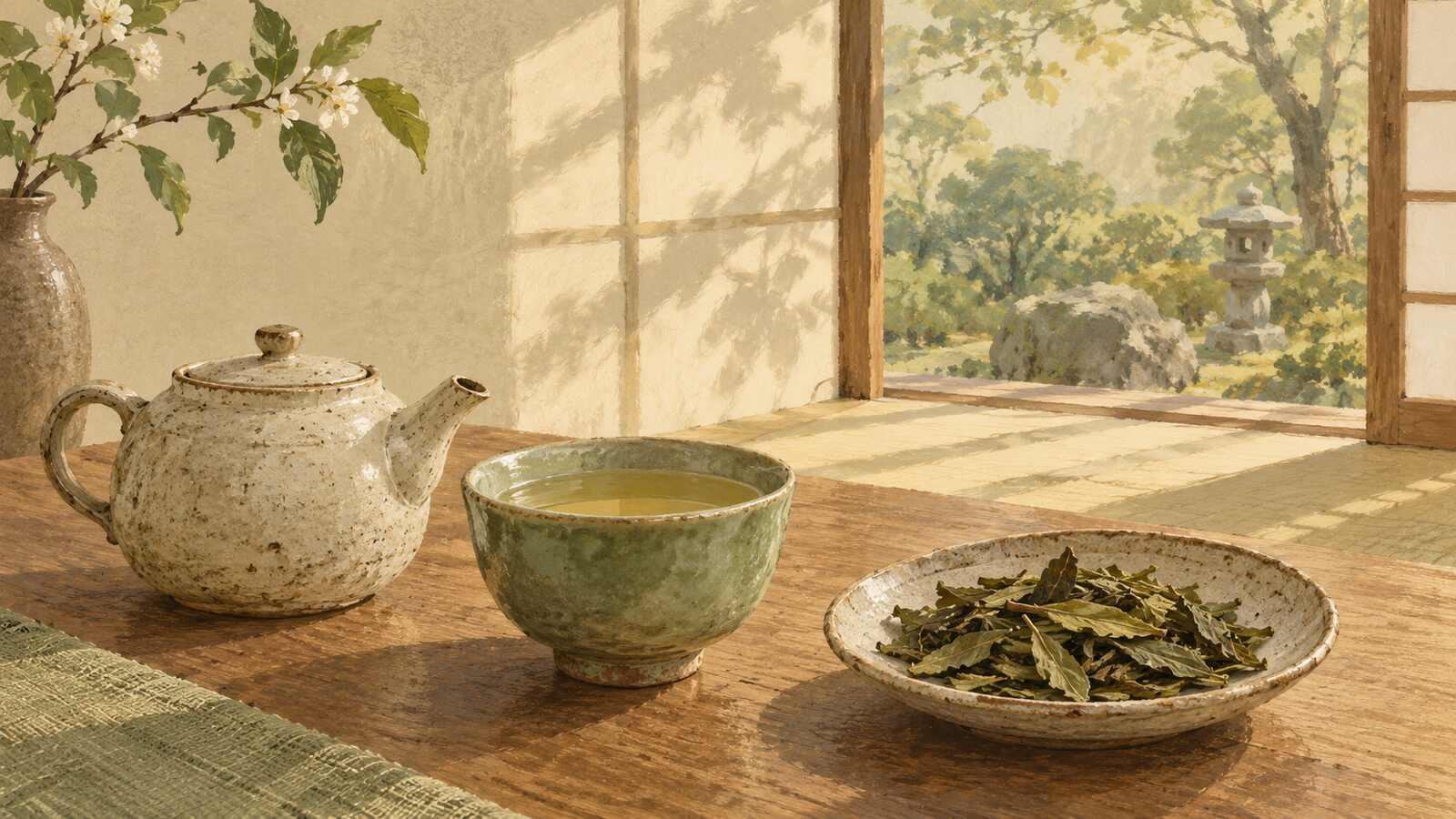
You pick up a bag marked bancha expecting a single familiar Japanese tea. Another shop has a darker, roasted-looking tea under the same word. Which one did you buy, and how should you brew it?
Start with the label, not a generic temperature chart. Bancha names a category of Japanese tea material, while the finished cup depends on what the maker picked, processed, and packed. A green bancha and a roasted tea made from bancha do not have to taste or brew alike. This guide gives you a way to read the packet, compare nearby styles, and make a first cup you can adjust rather than guess at.
What does bancha mean?
The Japanese tea industry's green tea labeling standard defines bancha or kawayanagi as tea made from leaves that have grown firmer, older leaves and stems, or leaves picked between named tea seasons. It is a definition of material and timing, not a promise that every bag will contain exactly the same leaf shape or produce the same flavor.
That distinction helps with a common buying mistake. A seller may use bancha to introduce an everyday green tea. Another may place bancha in a roasted-tea category because bancha can be the base for hojicha. The same standard defines hojicha by strong roasting of sencha, bancha, or similar tea. If the package says both "bancha" and "roasted," read it as a description of the starting tea and the processing, then follow that product's brewing directions.
Ippodo's Wakayanagi gives a concrete green-tea example. The maker lists its ingredients as Japanese green tea and categorizes the product as bancha. It describes a light, refreshing cup with a pleasant sharpness. That is a tasting note for Wakayanagi, not the flavor definition of all bancha. Another producer's harvest, sorting, or roast can change what you taste.
Before buying, ask whether the tea is green or roasted and whether the maker gives a brew recipe. Those answers are more useful than an unsupported promise that all bancha is "mild" or "low caffeine."
Bancha versus sencha, kukicha, and hojicha
These names answer different questions. The Japanese labeling standard defines sencha by a steamed, rolled, and dried leaf process; kukicha or stem tea by the stems and leaf stalks separated during finishing; and hojicha by roasting. Bancha describes its raw material and harvest context. Some labels can overlap because a tea can be described by its base material and by what happens to it later.
| Name on the packet | What it tells you first | What to check next |
|---|---|---|
| Bancha | Firmer or older leaves and stems, or leaves picked between named tea seasons | Whether this particular tea is green or roasted, and its maker's brew directions |
| Sencha | A steamed, rolled, dried leaf tea | The product's suggested water, leaf amount, and time |
| Kukicha | A stem- and leaf-stalk-focused tea | Whether the stems are green or roasted |
| Hojicha | The tea was roasted | Which tea or plant parts were roasted, and how the maker prepares it |
For more detail, read our guides to sencha, kukicha, and hojicha. Compare the products you can actually buy and brew.
What does bancha taste like?
There is no single tasting note that covers every bancha packet. Ippodo calls Wakayanagi light and refreshing, with pleasant sharpness. That description is a useful expectation for that product. A roasted bancha-based hojicha is a different preparation, so its roasted character should not be treated as a defect in green bancha or as a universal trait of the bancha category.
When you brew a new bag, write down what you actually notice before reading three pages of tasting adjectives. Try three plain prompts: What do the dry leaves smell like? Is the cup light or full? Does the finish feel soft, sharp, or drying? A note such as "light, clean, a little sharp at the end" is enough to compare your second brew with your first.
If the cup is stronger or sharper than you wanted, the next brew is an experiment in your own kitchen. Keep the same leaf and water amounts, then shorten the steep slightly. If it tastes too faint, keep the other variables and try a little longer. This is a way to learn your particular tea; it is not a claim that one adjustment works for all bancha. Check the maker's directions before changing temperature, especially if you are unsure whether the tea is roasted.
The word bancha alone does not tell you the freshness of a bag. Look at its named product, ingredients, packaging date if supplied, and instructions.
How to brew bancha: one labeled example
For its Wakayanagi bancha, Ippodo instructs you to use 10 g of leaves, 240 ml of water at 100°C, and 30 seconds. The page says to serve 30 seconds after beginning to pour the hot water. This is a producer's recipe for Wakayanagi, not a universal rule for every tea sold as bancha.
Here is how to make that recipe repeatable:
- Identify the tea. Check that the packet is Wakayanagi if you intend to reproduce Ippodo's directions. For another bancha, read that maker's recipe first.
- Measure 10 g of leaf. A scale removes guesswork when the leaves are bulky or broken. Ippodo also calls this two tablespoons for its product.
- Measure 240 ml of water. Use a pot or heat-safe vessel with enough room for the leaves. Ippodo specifies water at 100°C.
- Start a 30-second timer as you begin pouring. Pour out the tea at the end rather than letting leaves sit in the liquid while you talk or prepare a cup.
- Taste, then take a note. Record the tea name, leaf amount, water amount, temperature, time, and one impression of the cup.
For the first test, use a vessel close to the specified volume. If you change the ratio for a larger mug, record it as a new recipe. A 30-second brew is easy to overshoot, so use a timer.
For your second cup, adjust one variable. Perhaps the first was sharper than you wanted: keep the leaf, water, and temperature the same and shorten the time a little. If it was weak, try a little longer while leaving the other inputs alone. Tasting tells you whether that change suited you. It does not prove anything about what a different producer's bancha needs.
How much caffeine is in bancha tea?
Treat bancha as a tea that can contain caffeine. The exact amount in your cup is not established by its name or by the brewing example above. Leaf material, product, dose, cup size, and preparation all matter to any cup-level measurement. Ippodo's Wakayanagi page provides ingredients and a brew recipe, but no tested caffeine amount for that brewed serving. Giving that cup a precise milligram figure would be guesswork.
Descriptions such as "gentle" or "everyday" refer to how a seller presents or tastes a product; they are not caffeine tests. Nor does roasting a bancha base automatically make its drink caffeine-free. If caffeine timing matters to you, check the particular product information and treat an unmeasured cup as caffeinated. Our tea caffeine guide explains why a number from one preparation should not be pasted onto another.
The category label also cannot establish whether a serving suits pregnancy, children, or a medical condition. Seek advice appropriate to the person and product.
Choosing and keeping a bag you will enjoy
At the shop, look past the front label. If you want a green bancha, check that the description says green or unroasted and read any photo or note about the leaves. If you want toastier flavors, ask whether the tea was roasted and compare it with hojicha. Do not buy a tea solely because a category name sounds familiar; one extra line of processing information can prevent brewing the wrong style.
Follow the package's storage instructions. Keep it closed, away from a damp sink or strongly scented cupboard. Our tea storage guide covers the choices in more detail.
For a repeatable routine, write a short label on the tin: "Wakayanagi, 10 g, 240 ml, 100°C, 30 sec," or replace those figures with your packet's own directions. If you change the recipe, cross out the old time and record the new one. Steep can time the brew you chose, so a cup that worked today is easier to repeat next week. Keep the tea name in your brew notes if you own both green bancha and a roasted tea; the same unlabeled recipe should not stand in for two different packets.
Frequently asked questions
Is bancha the same as green tea?
Bancha is a Japanese tea category within the green tea labeling standard. A specific bancha may be sold as green tea, like Ippodo's Wakayanagi. Bancha can also be the starting material for roasted hojicha. Read the processing description on the packet to know which drink you have.
Is bancha just a cheaper sencha?
The official names describe different material or processing. Sencha is defined by its steaming, rolling, and drying process; bancha by firmer or older leaves and stems, or leaves picked between named tea seasons. Price is a seller decision, not the definition of either tea. Compare named products and their brew directions instead of treating the two words as price grades.
Should I brew every bancha with boiling water?
No single recipe follows from the category name. Ippodo specifies 100°C for Wakayanagi, along with its 10 g, 240 ml, 30-second method. Use a different producer's instructions for a different product. If the label says roasted, check the roast tea's directions rather than borrowing a green bancha example.
Is bancha caffeine-free or always lower in caffeine than sencha?
Neither claim follows from the name alone. The Wakayanagi product page does not supply a tested caffeine amount per prepared cup, and a comparison needs specific products and preparation methods. If you are limiting caffeine, count bancha as a caffeinated tea unless your exact product provides evidence otherwise.
What should I change if my first cup tastes too sharp?
First confirm that you followed the directions for your own tea. On the next cup, keep the other measurements fixed and try a slightly shorter steep. Note whether you prefer it. A change that suits one bag is a preference you discovered, not a universal bancha rule.
Bancha becomes clearer when you identify the product, check whether it is green or roasted, and brew its first cup as directed. Then a measured change and a tasting note can turn that packet into a tea you know how to make again.
Related Articles
Kukicha Tea: Taste, Caffeine, and How to Brew It Well
Explore kukicha, Japan’s stem tea: how green and roasted versions taste, what affects caffeine, how to brew a cup, and how it differs from hojicha and sencha.
Hojicha vs Matcha: Taste, Caffeine, and Which to Choose
Hojicha vs matcha, compared on taste, caffeine, theanine, and grades with Japan's official food data. Hojicha has less caffeine than matcha, but far from none.

Sencha vs Gyokuro: Which Japanese Green Tea Should You Choose?
Choose sencha or gyokuro by taste, serving style, brewing attention, and value. Compare everyday freshness with concentrated umami without health promises.