Hojicha vs Matcha: Taste, Caffeine, and Which to Choose
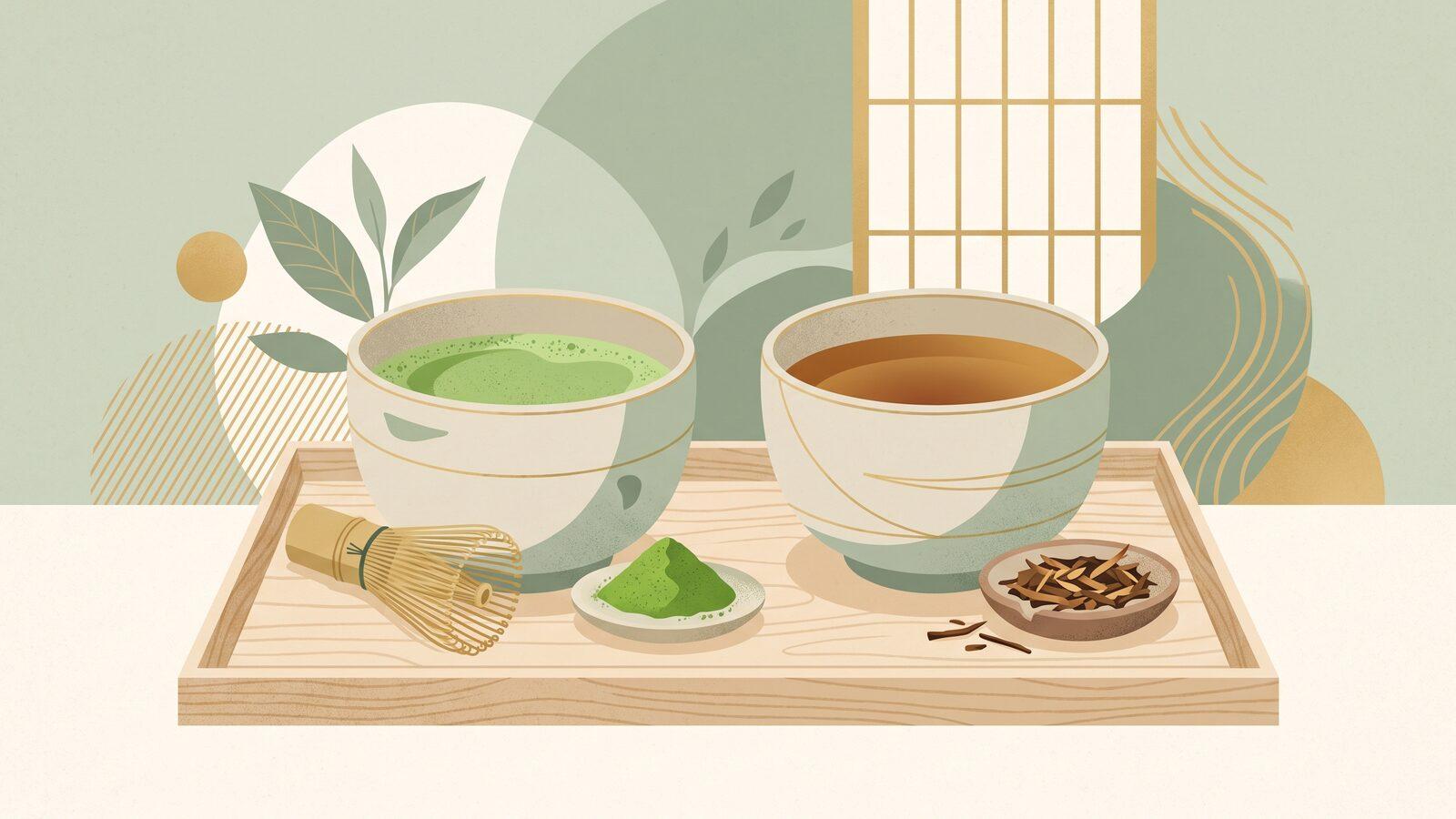
Order a matcha latte and a hojicha latte at the same café, and the two cups look unrelated. The matcha is a vivid, almost electric green. The hojicha is chestnut brown and smells of toasted grain. Both are Japanese green tea, made from the leaves of Camellia sinensis. Matcha's leaves are shaded before harvest and ground into a powder you drink whole; hojicha's are roasted over strong heat until they turn brown. Same plant, very different cups.
The flavor gap is as wide as it looks. The caffeine gap is smaller than hojicha's reputation suggests. Hojicha is often described as almost caffeine-free, yet Japan's official food-composition tables give brewed hojicha the same caffeine per 100 mL as brewed sencha. The figures below come from those tables and from Japanese research on roasting, not from tea-shop marketing.
Same Plant, Different Paths
The split begins before harvest for matcha and after it for hojicha.
Matcha is ground tencha. Before picking, the bushes are shaded for about two to three weeks, according to the Japanese tea industry's green tea labeling standard. The picked leaves are steamed and dried flat without rolling. The heavier stems and veins are sifted out, and what remains is ground on a stone mill or a mechanical grinder into particles of 1 to 20 micrometers. Whisk that powder into water and you drink the entire leaf.
Hojicha starts as ordinary green tea. The same labeling standard defines it as sencha, bancha, or similar tea roasted over strong heat. Bancha is made from larger, tougher leaves and can include stems, and hojicha is usually made from later harvests rather than the prized first flush. The tea is often said to date from Kyoto in the 1920s.
Roasting forms pyrazines, the compounds behind hojicha's toasty smell; a 2008 study identified them among its most potent odorants. A 2017 study found that stem hojicha, roasted from stems sorted out during green tea production, carries more of those pyrazines than leaf hojicha, and more of the floral compounds linalool and geraniol.
Taste and Color
Matcha is vivid green in the tin and in the bowl. It tastes fresh and grassy, with a savory depth. That depth is umami, and shading builds it by raising the leaf's amino acids. Whisked well, a bowl has a fine foam and a creamy texture. Powder from less-shaded or later-harvest leaf tastes more bitter.
Hojicha brews a reddish brown. It tastes toasty and nutty, with a caramel-like sweetness and little bitterness, because roasting breaks down many of the catechins behind green tea's astringency. Stem hojicha can carry a light floral note over the toast. The roast also takes away sencha's grassy edge, so if that edge is what puts you off Japanese green tea, start with hojicha.
Caffeine: The Honest Comparison
Matcha has more caffeine per serving. The real question is how much more.
Japan's Standard Tables of Food Composition, compiled by the education and science ministry, list brewed hojicha at 0.02 g of caffeine per 100 g, or about 20 mg per 100 mL. Brewed sencha gets exactly the same figure. The tables brew both at nearly the same ratio of leaf to water: hojicha as 15 g in 650 mL of 90°C water for 30 seconds, sencha as 10 g in 430 mL at 90°C for one minute. Matcha powder is listed at 3.2 g of caffeine per 100 g, so a 2 g serving holds about 64 mg, all of which you drink.
| Cup | Caffeine |
|---|---|
| Matcha, 2 g whisked | about 64 mg |
| Hojicha, 150 mL cup | about 30 mg |
| Hojicha, 200 mL mug | about 40 mg |
| Sencha, 150 mL cup | about 30 mg |
| Brewed coffee, 150 mL cup | about 90 mg |
We calculated these from the tables' per-100 g values; real cups vary with the leaf and how you brew it. Per serving, matcha carries roughly 1.5 to 2.5 times the caffeine of a cup of hojicha, depending on the cup. Not 10 times, and not 20.
Roasting does remove some caffeine, but not much. A 2025 analysis of eight types of Japanese green tea found that heat broke down hojicha's theanine and catechins, while its caffeine was "slightly reduced by sublimation but not decomposed." A roasting trial at the Kochi Prefectural Tea Experiment Station measured the loss directly: almost none after a light roast, 6 to 13% after a deep one. And in a 2024 study that served volunteers both teas, the hojicha delivered 26 mg of caffeine and the green tea 28 mg.
So why does some hojicha feel gentler? Mostly the raw material and the brew. In the Kochi tests, second-flush leaf held 85% of the caffeine of first-flush leaf, and stem tea 77%. Hojicha is also brewed briefly, often for about 30 seconds, and the longer any tea steeps, the more caffeine reaches the cup.
Hojicha powder is a different case. It is the whole roasted leaf, ground, so nothing stays behind in the pot. The 2025 analysis measured about 20.7 mg of caffeine per gram of hojicha leaf. By our estimate, the 2 to 3 g of powder that goes into a latte carries roughly 40 to 60 mg, close to a bowl of matcha.
The short version on hojicha caffeine: lighter than matcha per serving, but not caffeine-free. If caffeine keeps you awake, treat an evening cup like a light green tea rather than an herbal one, and if you are limiting caffeine for any reason, count it. Our guide to caffeine in tea covers the other variables.
L-Theanine and the "Calm Focus" Claim
Matcha is often sold on "calm focus," the idea that L-theanine, an amino acid plentiful in shaded tea, takes the edge off its caffeine. Whatever you make of that claim, it assumes the cup actually contains theanine.
Shading raises both theanine and caffeine in the leaf, as a 2018 study of covered tea bushes found. Roasting breaks theanine down. In the 2025 analysis, hojicha leaf held 0.32 mg of theanine per gram against 18.91 mg in standard sencha, and 9.0 mg of EGCG, the main green tea catechin, against 62.2 mg. That hojicha came from later harvests, which start lower, but the Kochi trial saw the same collapse within one batch of leaf: a light roast left about 6% of the theanine in first-flush tea, and after medium and deep roasts none was measured. Buy hojicha for its flavor and lighter caffeine, not for theanine.
Matcha is no sure thing either. A 2026 review of Japanese green tea composition reanalyzed matcha sold in 2017. In Japan, the three highest-theanine samples averaged 41 mg per gram and the three lowest 8.5 mg, about a fifth as much. Among 67 brands sold outside Japan, high-theanine matcha was extremely rare. Packaging rarely lists theanine, so the label cannot tell you which kind you bought.
"Ceremonial" vs "Culinary" Grades
These are seller labels, not official grades. The industry's labeling standard defines matcha only by how it is made. It has no ceremonial or culinary tier, and it lists vague claims such as "finest" or "deluxe" as improper when nothing objective backs them. It also files funmatsucha, ordinary tea ground to powder, as a separate category, so "green tea powder" on a bag does not necessarily mean matcha.
According to the 2026 review, what gets sold as food-grade matcha is often made from leaf shaded for less time or picked later in the year, and price is no longer a reliable guide even in Japan. Judge the powder itself:
- Color: bright, clear green rather than olive or yellowish.
- Aroma: fresh and sweet when you open the tin, not flat or stale.
- Origin and harvest: a named region and a first-flush harvest tell you more than the word "ceremonial."
- Freshness: a recent packing date and a tin small enough to finish soon.
For hojicha, check the roast level, from golden and light to deep brown, and what was roasted: leaf, stems, or a powder meant for lattes and baking.
How to Prepare Each
Matcha: Kyoto Prefecture's tea research institute in Uji recommends sifting about 2 g of powder into a warmed bowl and preparing 70 mL of water cooled to 70 to 80°C. Pour in a little water first and work out the lumps, add the rest, then whisk from the wrist in quick back-and-forth strokes until the foam is fine. The institute suggests slightly cooler water in summer and slightly warmer in winter. Our matcha brewing guide walks through each step, and the complete guide to matcha covers tools and buying.
Hojicha: Japan's agriculture ministry recommends 2 to 3 g of leaf per 100 mL, boiling water to lift the roasted aroma, and about 30 seconds. Pour out every last drop so the leaves stop steeping, and brew the second infusion right away. Our hojicha guide covers brewing and resteeping.
Lattes: both work, and our matcha latte guide covers the green one. Hojicha powder behaves like matcha: whisk it into a little hot water before adding milk, or bake with it the same way. Our hojicha latte recipe covers powder and loose-leaf versions.
Which Should You Choose?
- A vivid morning cup: matcha. It has more caffeine and more umami.
- An after-dinner cup: hojicha, for its soft, roasted flavor and less caffeine than matcha. Less is not none, so keep late cups small if you sleep lightly.
- A latte: either. Matcha for grassy and savory, hojicha for toasty and caramel-like.
- New to Japanese tea: try both side by side. Our matcha vs green tea comparison adds sencha, and the best teas for beginners guide covers what to try next.
Short Steeps and Cooler Water
Each tea has one step that is easy to get wrong. With hojicha it is time: 30 seconds passes quickly while you find the cups. With matcha it is temperature: water straight off the boil is well above the 70 to 80°C the Kyoto institute recommends. Steep's matcha preset puts the temperature in front of you before you pour, and a custom hojicha timer keeps the 30-second steep the same for every pot and every resteep. Get Steep, then pour one of each.
Related Articles

Matcha vs Green Tea: Caffeine, Health Benefits, Taste, and Which One to Drink
Matcha and green tea come from the same plant, but matcha is shaded, ground, and drunk whole. What that changes in caffeine, L-theanine, EGCG, taste, and price.
Oolong vs Green Tea: Taste, Caffeine, and Which to Choose
Compare oolong and green tea by flavor, processing, brewing, caffeine, and value. Choose a first tea without relying on weight-loss claims or caffeine myths.

White Tea vs Green Tea: Which One Should You Choose?
White tea or green tea? Compare processing, flavor, caffeine, freshness, price, and beginner-friendly styles to choose the cup that fits your own taste.