Matcha
Japan · Uji, Kyoto
Quick Brewing Summary
Water Temperature
80°C
176°F
Steep Time
0:15
min:sec
Water Amount
70 ml
2.5 oz
Leaf Amount
2 g
1 tsp
The Heart of Japanese Tea Ceremony
Matcha is a finely ground powder made from shade-grown green tea leaves, and it occupies a singular place in the world of tea. Unlike every other tea where leaves are steeped and discarded, matcha is whisked directly into water and consumed whole — leaf, stem, and all. This means the drinker ingests the full nutritional and flavor content of the tea plant, making matcha one of the most potent and distinctive beverages on earth.
Origins and History
Matcha's roots trace to China's Song Dynasty (960-1279), when Buddhist monks ground tea into powder and whisked it with hot water. The Zen monk Eisai brought this practice to Japan in 1191, where it took hold and eventually evolved into chanoyu, the Japanese Way of Tea. While powdered tea fell out of fashion in China, Japan refined and elevated it into an art form. The tea master Sen no Rikyu (1522-1591) codified the principles of wabi-cha — simplicity, respect, purity, and tranquility — that still govern the Japanese tea ceremony today.
The Uji region south of Kyoto has been the epicenter of matcha production since the 14th century. Other notable growing areas include Nishio in Aichi Prefecture and parts of Kagoshima, but Uji matcha remains the gold standard.
Production
Matcha production begins identically to gyokuro: tea bushes are shaded for approximately three weeks before harvest, boosting chlorophyll and amino acid levels. After picking, the leaves are steamed and dried but — crucially — not rolled. The resulting flat, flaky leaf material is called tencha. The tencha is then stone-ground into an ultra-fine powder using granite mills that turn slowly to avoid generating heat. A single mill produces only about 30 to 40 grams of matcha per hour.
Flavor Profile
Ceremonial-grade matcha delivers a rich, full-bodied umami flavor with a natural sweetness and creamy texture. The finish is long and vegetal, with a pleasant grassiness that fades into a subtle sweetness. Lower grades (culinary matcha) tend to be more astringent and bitter, better suited for lattes and baking than for drinking straight. Color is a reliable quality indicator: vibrant, electric green signals high-grade matcha, while yellowish or dull green suggests lower quality or oxidation.
Caffeine and Wellness
A standard serving of matcha (2 grams whisked into 70 ml of water) contains approximately 60 to 70 mg of caffeine — comparable to a small cup of coffee. However, matcha's high concentration of L-theanine modulates the caffeine's effects, producing a focused calm that practitioners describe as alert serenity. Because the entire leaf is consumed, matcha delivers significantly more catechins, chlorophyll, and vitamins per serving than any steeped tea.
How to Enjoy
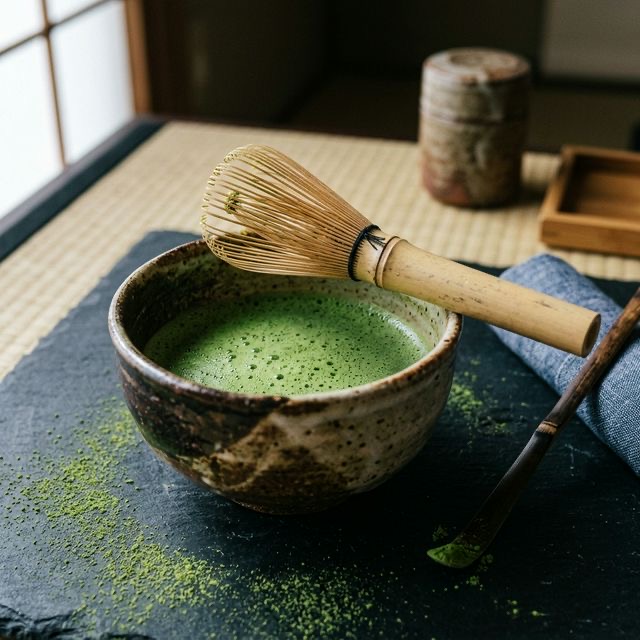
Matcha can be prepared as a thick, concentrated paste called koicha (used in formal tea ceremony) or as a lighter, frothy bowl called usucha (the everyday style). Beyond traditional preparation, matcha has become a global ingredient in lattes, smoothies, ice cream, and pastries. For the fullest experience of matcha's character, however, nothing compares to a bowl of ceremonial-grade usucha whisked to a fine, jade-green froth and sipped in quiet appreciation.
Health Benefits
- Extremely high in antioxidants (EGCG) since the whole leaf is consumed
- L-theanine promotes calm, focused alertness without jitters
- Supports metabolism and provides sustained natural energy
Brew this tea with Steep
Get precise brewing timers, temperature guides, and multi-steep support for Matcha and dozens more teas.
App Store