Oolong vs Black Tea: Flavor, Brewing, and Which to Try
 Ivan Terekhin
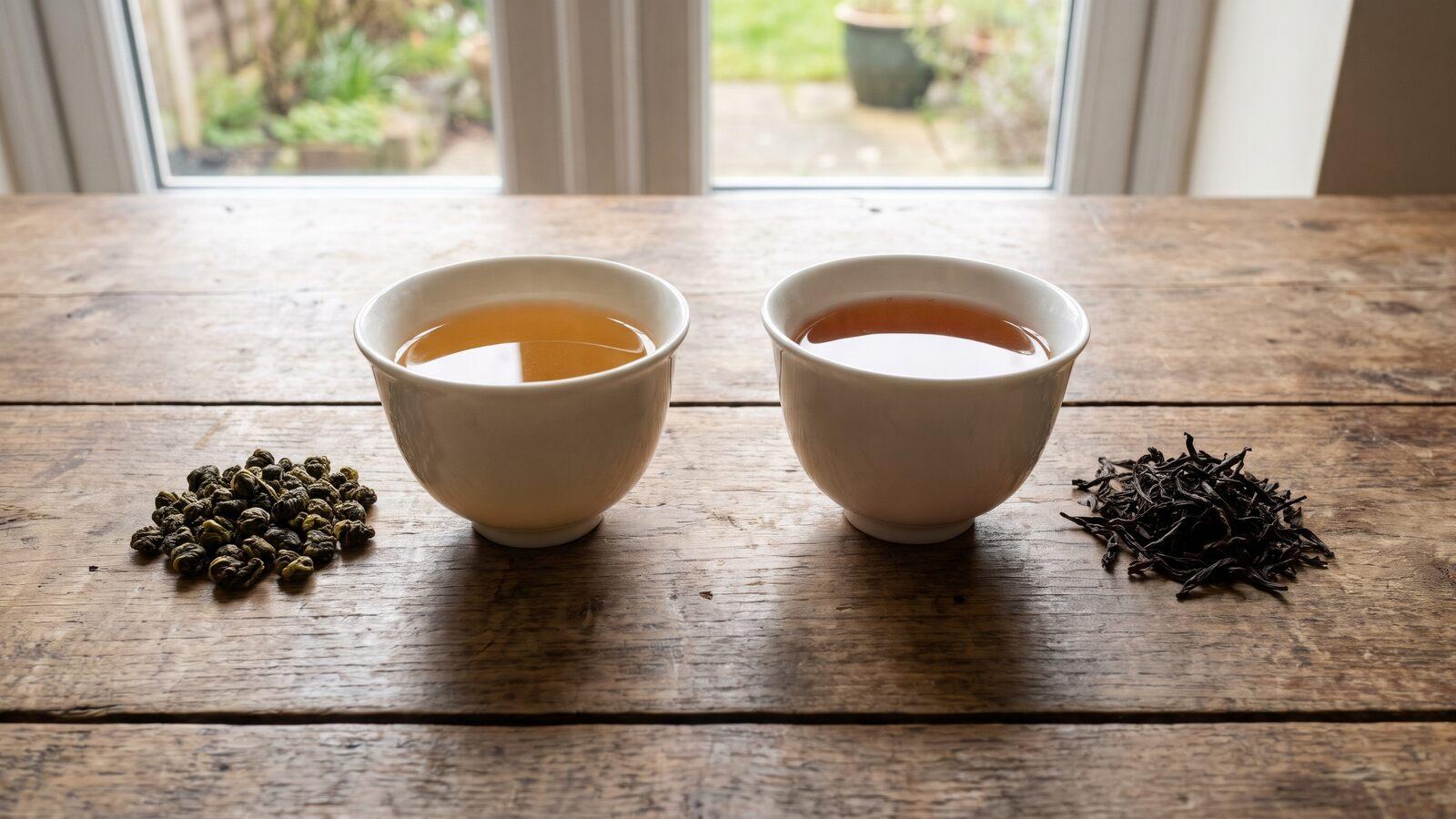
Choose black tea when you want a dependable, full-bodied cup that can stand up to milk. Choose oolong when you want to explore how floral, fruity, or roasted notes change over several infusions. These are starting points, not rules: a roasted oolong may taste closer to black tea than a light oolong does.
Both come from Camellia sinensis. Processing makes the categories different. This guide compares what you can taste and measure, then gives you a fair way to try them side by side.
Processing: oxidation and roast are different choices
Black tea is typically allowed to oxidize extensively before it is dried. Oolong makers interrupt oxidation earlier, but the point varies greatly by style. Oolong leaves may also be rolled and roasted. Roast adds its own flavor; it is not a measurement of oxidation. Our oolong guide shows why a light Tieguanyin and a roasted Da Hong Pao should not be treated as one flavor.
The categories describe a process, not a quality ranking. A fresh black tea can have more complexity than a poorly stored oolong. Buy a small amount from a seller who names the tea and gives preparation instructions.
Flavor: compare actual styles
For a classic black-tea starting point, try Assam for body and malt, or Darjeeling for a lighter, brisker cup. Keemun can offer a different, softer black-tea direction. These are examples rather than a promise that every harvest tastes alike.
For oolong, Tieguanyin is a useful lighter reference. A Dong Ding with a noticeable roast can give you a warmer, deeper comparison. Read the packet: processing and roast differ even between teas sold under the same name.
If you usually add milk, try each tea plain first. Milk can work well with a strong black tea, but it may hide the aroma you bought a light oolong to taste. You can still drink either tea the way you enjoy it.
Brewing: use a repeatable first cup
Start with the seller's recipe. If there is none, a practical first trial is about 2 to 3 grams per 200 milliliters. Begin a black tea around 90 to 95°C for 3 minutes. For a lighter oolong, try 85 to 90°C for 2 minutes in a mug; a roasted oolong may call for hotter water. Taste and adjust one variable at a time. Our black-tea brewing guide and oolong guide give the fuller methods.
| Starting trial | Black tea | Lighter oolong |
|---|---|---|
| Water | 90 to 95°C | 85 to 90°C |
| First steep | About 3 minutes | About 2 minutes |
| Next step | Taste before adding milk | Taste a second infusion |
This table is a comparison setup, not a universal recipe. Leaf size, amount, roast and vessel change extraction. Strain the leaves at the end of the timed steep so the cup does not keep getting stronger. Tea Timer can record the two recipes and run each timer without changing the conditions halfway through.
Caffeine: color is a poor shortcut
Both teas contain caffeine. Oxidation level, roast color and the darkness of the liquor do not tell you how much caffeine is in your particular cup. Leaf amount, harvest and brewing also matter. A laboratory study of brewed teas found substantial variation among its tested black, green and white teas. It did not establish a reliable oolong-versus-black caffeine ranking. If caffeine matters to you, look for a measured value for your product and keep the serving size consistent. Our caffeine guide explains the variables.
A fair two-cup test
Buy small packets of one named black tea and one named oolong. Make the first cup of each using its own measured recipe, then write down the leaf weight, water volume, temperature, time and what you notice. Do not force both teas into the same temperature just to make the experiment look controlled: the useful question is how each tastes when brewed well.
Try the oolong again as a second infusion and note whether its aroma changes. Re-steeping tea is part of the appeal of many whole-leaf oolongs, while some black teas also give a satisfying second cup. Compare what you would actually drink again, not which category sounds more prestigious.
If the cup is bitter, shorten the steep before discarding the tea. If it is thin, check your leaf amount. After two or three careful brews, you have a better answer than a generic claim that one type is healthier or stronger. Get Tea Timer to repeat the recipe you liked.
Related Articles
Oolong vs Green Tea: Taste, Caffeine, and Which to Choose
Compare oolong and green tea by flavor, processing, brewing, caffeine, and value. Choose a first tea without relying on weight-loss claims or caffeine myths.

White Tea vs Green Tea: Which One Should You Choose?
White tea or green tea? Compare processing, flavor, caffeine, freshness, price, and beginner-friendly styles to choose the cup that fits your own taste.

Earl Grey vs English Breakfast: Which Black Tea Should You Choose?
Earl Grey or English Breakfast? Compare bergamot flavor with a malty blend, milk and lemon, caffeine, brewing, and which one suits your morning or afternoon.