Oolong vs Green Tea: Taste, Caffeine, and Which to Choose
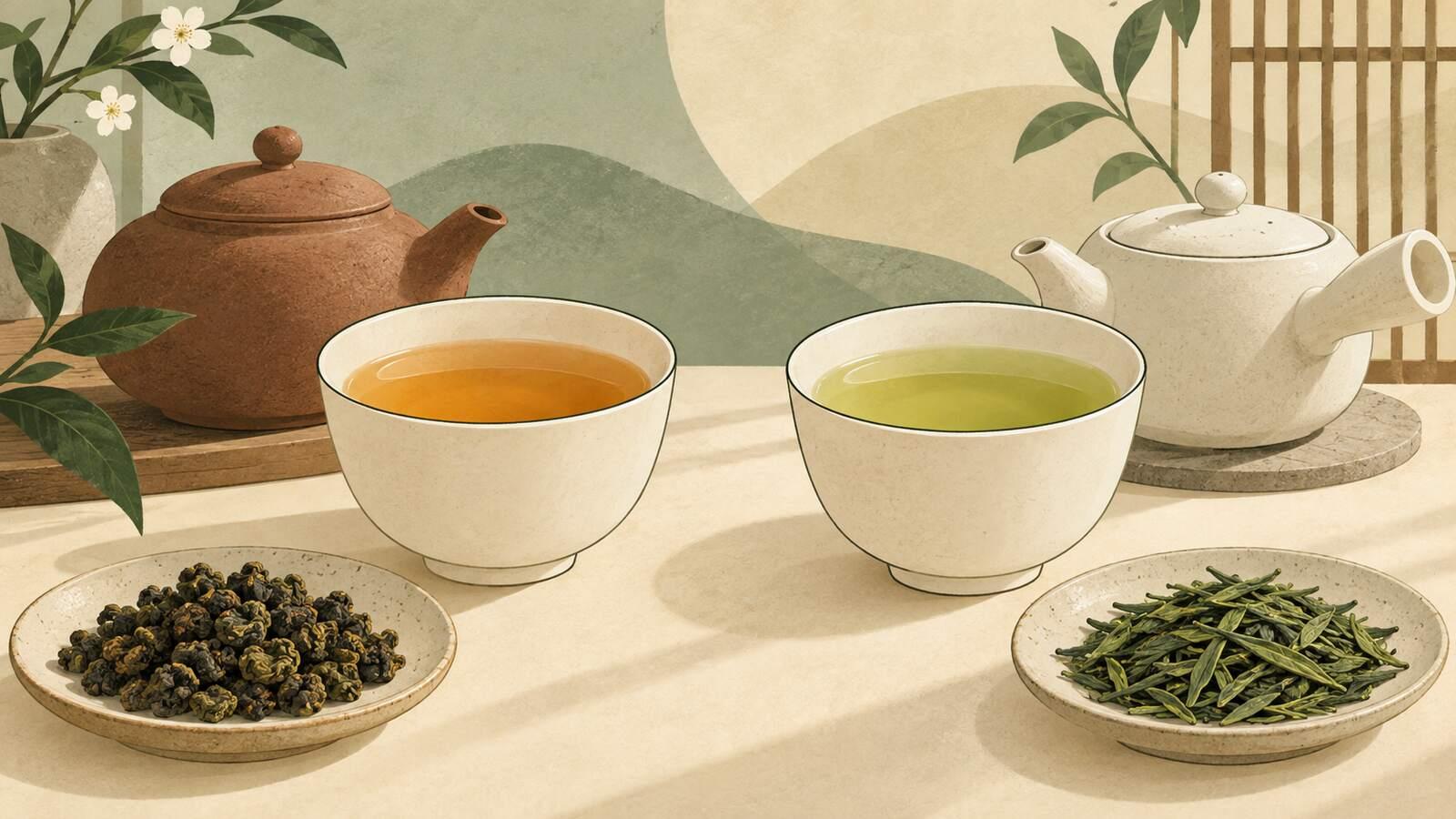
Choose green tea if you want a fresh, grassy, nutty, or savory cup. Choose oolong if you want to explore floral fragrance, rounded fruit, or deeper roasted flavors across several infusions. Those are useful starting points, but the style on the packet matters more than the category alone.
Both teas come from Camellia sinensis. Their main difference is how the leaves are processed, especially when oxidation is stopped. Oolong is not green tea mixed with black tea, and a green-looking oolong is still an oolong.
This comparison helps you choose what to buy and what to expect in the cup. For detailed preparation, keep our oolong brewing guide and green tea brewing guide beside it.
Processing explains the broad difference
Green-tea producers heat the leaf early to limit enzymatic oxidation. Steaming is common in Japan; pan-firing is common in China. The leaves are then shaped and dried. The result often preserves a fresh vegetal character, though the heat treatment also helps shape the flavor.
Oolong production allows controlled oxidation before heat stops it. Withering and bruising the leaves help develop aroma; rolling, drying, and sometimes roasting add further character. There is a wide range between a lightly oxidized floral oolong and a darker, heavily roasted style. Teatulia's account of oolong processing describes this sequence and its variation.
Oxidation and roasting are separate choices. A tea can have a pronounced roast without belonging at the darkest end of the oxidation range. That is why "oolong tastes halfway between green and black tea" is a weak buying guide: the category contains too many distinct styles.
Read the actual tea name and tasting notes. "Light floral Tieguanyin" tells you more than "premium oolong." "Steamed sencha" tells you more than "healthy green tea."
Flavor: pick a style, not just a category
For an approachable green tea, Dragon Well offers a nutty, gently toasted direction. Sencha is more likely to emphasize fresh grass, vegetables, sea air, and a brisk finish. Gyokuro brings a concentrated savory character and deserves its own brewing method rather than the same mug recipe.
Ippodo's green-tea collection illustrates how different sencha, gyokuro, and roasted bancha can be within one broad category. "Green" does not guarantee a pale cup or a single grassy flavor.
For a light oolong, Tieguanyin can be fragrant and floral, while Ali Shan often offers a soft texture and sweet aroma. Both can suit someone who finds a strongly vegetal sencha too sharp.
For more roast and body, try Dong Ding or Da Hong Pao. Look at the seller's roast description: names identify a family or origin, not a guarantee that every packet tastes identical. Darker roasted styles can suggest nuts, toasted grain, wood, or dried fruit.
A creamy tasting note does not necessarily mean milk was added. It can describe texture or aroma. If avoiding added flavors matters to you, check the ingredients rather than inferring them from a poetic product name.
A practical choice for your first bag
Use this as a starting map:
- Fresh and savory: try sencha. Expect a lively cup, and follow its temperature instructions carefully.
- Nutty without a deep roast: try Dragon Well. It is an accessible way into pan-fired green tea.
- Flowers and a soft finish: try a light Tieguanyin or Ali Shan oolong.
- Toasted, rounded, and substantial: try a roasted Dong Ding or Da Hong Pao.
- Several changing infusions: try whole-leaf oolong in a small pot. Green tea can also be re-steeped, but the session develops differently.
- A simple everyday mug: either category can work. Choose a clear brewing recipe and a price that makes regular use comfortable.
If possible, buy small samples of one green and one oolong at a similar price. Comparing an old supermarket green with a carefully stored premium oolong mostly tells you about freshness and grade, not the categories.
Avoid buying the rarest version first. You need enough experience to recognize whether its subtle qualities matter to you. A fresh, straightforward tea is a better reference point than an expensive name you feel obliged to enjoy.
Brewing differences matter more than extra equipment
Many green teas benefit from cooler water and careful steeping. Some oolongs tolerate or need hotter water to open up their aroma. These are tendencies, not one universal temperature for each category. A shaded Japanese green and a roasted rock oolong should not receive the same recipe simply because both are loose-leaf tea.
Begin with the seller's directions and a vessel that lets you separate the leaves from the finished liquor. Leaving leaves in a large mug keeps extraction going and makes a fair comparison difficult.
For the first comparison, keep these variables visible:
- How much dry leaf you used.
- The water volume and temperature.
- The time before you removed or strained the leaves.
- Which infusion you are tasting.
Rolled oolong leaves expand dramatically. A teaspoon of tightly rolled leaves is not equivalent by weight to a teaspoon of long, open green leaves. A small scale makes comparison easier, but consistent spoonfuls and notes are still better than changing everything each time.
If the tea tastes harsh, shorten the steep before deciding you dislike the category. If it tastes thin, check the leaf quantity and temperature. Change one variable per attempt. Our guide to re-steeping tea explains how later infusions can differ from the first.
Caffeine does not follow a reliable color ladder
Both oolong and green tea contain caffeine. Do not assume that a darker cup has more, that roasting removes it, or that a light oolong is automatically a low-caffeine choice.
Leaf material, growing conditions, the amount you use, and brewing all matter. A pale cup can still contain a meaningful amount of caffeine. Repeated infusions add to your total intake even if each individual cup is small.
A laboratory analysis of brewed teas found wide variation in white, green, and black teas and no simple category trend in its samples. That study did not provide a direct oolong-versus-green ranking. It is a reason to distrust tidy color-based charts, not to invent a caffeine number for your own oolong.
When caffeine is important, use a product-specific measured value if one is available. Otherwise treat both categories as caffeinated and control serving size and timing. Our caffeine guide covers the variables in more detail. A caffeine-free herbal infusion is a clearer evening choice than trying to identify a supposedly caffeine-free true tea by appearance.
Health and weight-loss claims do not choose the winner
Neither category is a reliable weight-loss treatment. A study of a concentrated tea extract does not establish the same effect for the drink in your cup, and evidence about green tea does not automatically transfer to oolong.
NCCIH's green-tea evidence summary distinguishes tea as a beverage from supplements and notes safety concerns with some extracts. That distinction matters more than a marketing claim about "fat-burning" leaves.
Choose the drink you enjoy without needing much added sugar. If tea replaces a sugary drink, the substitution may be useful, but that does not prove a special effect of oolong over green tea. Neither a healthy-sounding name nor a long list of antioxidants tells you which packet will taste better.
Freshness, storage, and value
Keep both teas dry, sealed, and away from strong odors, heat, and light. A small airtight container or well-sealed original packet is usually more useful than an attractive transparent jar on a sunny shelf.
Fresh green tea and lightly oxidized oolong are often bought for lively aromas that fade with poor storage. A roasted oolong may hold a different character over time, but "old" is not automatically "aged well." Do not treat mustiness as a premium flavor.
Think about cost per satisfying session, not just the weight of the bag. An oolong you happily brew several times may offer good value even at a higher price per gram. A green tea you want every morning may be better value for you than a prestigious oolong that sits unopened.
Let a few cups settle the choice
Start with Dragon Well or sencha if freshness, nuts, or savory flavors appeal to you. Start with a light Tieguanyin for flowers, or a roasted Dong Ding for toast and depth. Taste each more than once before making a category-wide judgment.
Use Steep to repeat the recipe, then adjust the time or temperature deliberately. Get Steep, choose the relevant tea preset, and keep your first comparison simple: two small packets, a few consistent brews, and the cup you actually want to drink again.
Related Articles

White Tea vs Green Tea: Which One Should You Choose?
White tea or green tea? Compare processing, flavor, caffeine, freshness, price, and beginner-friendly styles to choose the cup that fits your own taste.

Sencha vs Gyokuro: Which Japanese Green Tea Should You Choose?
Choose sencha or gyokuro by taste, serving style, brewing attention, and value. Compare everyday freshness with concentrated umami without health promises.

Matcha vs Green Tea: Caffeine, Health Benefits, Taste, and Which One to Drink
Matcha and green tea come from the same plant, but matcha is shaded, ground, and drunk whole. What that changes in caffeine, L-theanine, EGCG, taste, and price.