Tea Film vs Cloudy Tea: What You Are Seeing and What to Change

You brew tea, leave it for a moment, and notice a thin, iridescent skin on the surface. Another day you chill a clear pot of tea and the whole drink becomes cloudy. Both get called “cloudy tea,” but they are different observations. A surface film sits where tea meets air; a cooling haze is suspended through the liquid. Changing your water may help one, while changing cooling or brew strength may help the other.
This guide helps you describe what happened before trying a fix. It also draws an important boundary: neither a clear cup nor a cloudy cup can prove that stored tea is safe to drink. If storage, water quality, or spoilage is in doubt, appearance is not a safety test.
First, describe where the change is
Hold the cup against a plain light background and look from the side, then from above. Does the surface have a continuous, sometimes shiny layer that breaks when a spoon crosses it? Does the body of the tea look clear beneath it? That points toward tea film, sometimes called tea scum. The film can reform as the cup sits.
Or does the whole drink look misty when you view it through the side of the glass, especially after cooling? That points toward tea cream or cooling haze. “Cream” here does not mean dairy. It names material that comes out of solution as some tea infusions cool. A cup can show both phenomena, and a photograph without the brew history cannot reliably tell you which one dominates.
Before either diagnosis, ask three plain questions: What tea did you brew? What water did you use? Did the appearance develop while the tea was hot, only after cooling, or after storage? Those details are more useful than the color alone. The water choice is covered broadly in our water quality guide; the distinction below is about how to test your particular batch.
Film on the surface: what the research shows
A tea film is an interfacial layer, not simply loose leaves floating around. Researchers who studied black and green tea brewed with different artificial tap waters found that tea compounds and dissolved ions in the water affect the film's appearance and strength. The details differed by tea and water, so “hard water always creates the same film” would be too simple. Giacomin and colleagues' 2023 study measured the layer rather than judging it by sight alone. An earlier composition study found calcium carbonate within tea scum formed with hard water.
For a home brewer, the practical clue is location. If the cup is mostly transparent but a thin skin forms on top while it is still warm, water minerals are a reasonable variable to test. Tea type matters too. A different leaf can form a different-looking film even with the same water. Do not infer a precise mineral level from a visible layer; only a water test would quantify that.
Haze through the tea: what cooling changes
When a hot tea cools, some dissolved compounds can associate and make the liquid look hazy. Beverage research calls this tea creaming. In black tea, the concentration of the infusion and the presence of components such as calcium influence when and how the haze develops. A study of black-tea creaming found that more concentrated tea formed cream earlier and larger particles; research on green tea and yaupon shows that cooling haze is not exclusive to black tea.
This is why a pot may be clear when poured and cloudy after a spell in the refrigerator. It does not mean that the refrigerator “spoiled” the tea. Nor does it prove the tea is safe: these papers examine physical chemistry, not whether your stored drink was handled safely. Milk, fruit, sweeteners, and tiny leaf particles can also alter what you see, so compare plain strained tea first.
Our iced-tea guide explains hot-over-ice and cold-brew methods. For the troubleshooting test here, focus on a smaller question: does the haze appear only as the same infusion cools, or was it present while hot?
Two-cup test 1: change only the water
Use this when you see a skin on a freshly brewed, still-warm cup.
- Choose one tea and one measured amount of leaf. Use the same two clean cups and the same steep time, temperature, and water volume in each. A tea-to-water ratio guide can help you make those measurements repeatable.
- Brew cup A with the water that gave you the film. Brew cup B with a different drinking water, such as filtered water, whose taste you already trust. Do not change the tea or add lemon to one cup only.
- Set both cups side by side. Look from above after the same resting time, then gently cross each surface with a clean spoon. Record whether a skin appears in A, B, both, or neither.
If the film is stronger in A, that is evidence within this kitchen test that water composition contributes. It is not a laboratory diagnosis of which mineral or how much. If both show a film, the leaf and your handling may matter, or the waters may be more similar than expected. Repeat before making a sweeping rule. If neither does, the first cup may have differed in residue, steeping, or time spent standing.
The original contribution is the controlled comparison: same leaf, same preparation, one water change. Swapping tea, kettle, cup, and water together produces a cleaner-looking drink perhaps, but teaches you little about the cause.
Two-cup test 2: compare the same infusion before and after cooling
Use this when tea looks clear hot but hazy after chilling. Make one plain, strained pot and divide it into two clean, food-safe vessels. Check the first portion while hot. Cover and refrigerate the second promptly, then compare it after cooling. Leaf, water and brew strength are the same. Temperature and elapsed time both change, so this home comparison cannot identify every cause by itself. Record the appearance at each stage.
Photograph the hot portion and the chilled portion from the same pot under similar light. If the latter is hazy, cooling is a plausible contributor. To test whether brew strength matters on a later day, make a second batch with less leaf while keeping water, steep time and cooling method fixed. Do not claim that one photograph proves the molecular mechanism.
If you are making iced tea for guests, you may prefer the taste of cold brew or a hot-over-ice recipe even if a conventional cooled pot is hazy. That is a recipe choice, not a food-safety fix. Do not leave a large pot at room temperature just to observe whether haze forms. Chill a small sample safely and follow normal kitchen hygiene for the batch.
Can you clear a hazy tea?
Sometimes gently warming a plain chilled sample makes it look clearer again. That is consistent with a reversible cooling effect, though a home observation does not identify every compound in the haze. If you intend to drink it cold, reheating only to clear its appearance may not be useful. Dilution or a weaker next brew can reduce haze, but both change flavor. Decide whether appearance actually matters to you before redesigning a recipe.
Filtering is different. A strainer removes leaves and larger particles; it may not remove the fine material responsible for cooling haze. Start by straining well so that leaf debris does not confuse the test. Then compare the water or strength one variable at a time. The brewing mistakes guide covers other causes of an unpleasant cup, including hard-water taste and oversteeping.
Appearance is not a microbial safety test
Tea film and cooling haze are physical observations. Spoilage is a separate question about ingredients, clean equipment, time, and storage. The cited film and creaming studies did not test whether a particular home-brewed batch is safe. They cannot tell you to drink a cup that has sat out or to discard a properly handled cup solely because of haze.
Use clean vessels and potable water. Refrigerate a batch you plan to keep, and follow any handling directions for added milk, fruit, or other perishable ingredients. If a stored drink develops an off smell, visible mold, or unexplained changes, discard it. Conversely, no smell and a clear appearance do not guarantee safety. For general food handling, consult the FDA's food safety guidance. If you are unsure how long a particular homemade mixture can be kept, make a fresh smaller batch.
Quick decision table
| What you see | When it appears | Useful next comparison | What it cannot tell you |
|---|---|---|---|
| Thin, sometimes shiny skin on top | Often while tea sits warm | Same tea, two different drinking waters | Exact mineral content or microbial safety |
| Haze through the whole glass | Often after cooling | Hot and chilled portions from the same pot | Whether storage was safe |
| Floating pieces | Immediately after pouring | Strain a plain sample | That tea cream formed |
| Unusual growth, off smell, or uncertain storage | After storage | Do not run a tasting experiment; discard if in doubt | A safe exposure level |
One cup may fit more than one row. Record the brew conditions; use safe handling, not appearance, for safety.
Related Articles
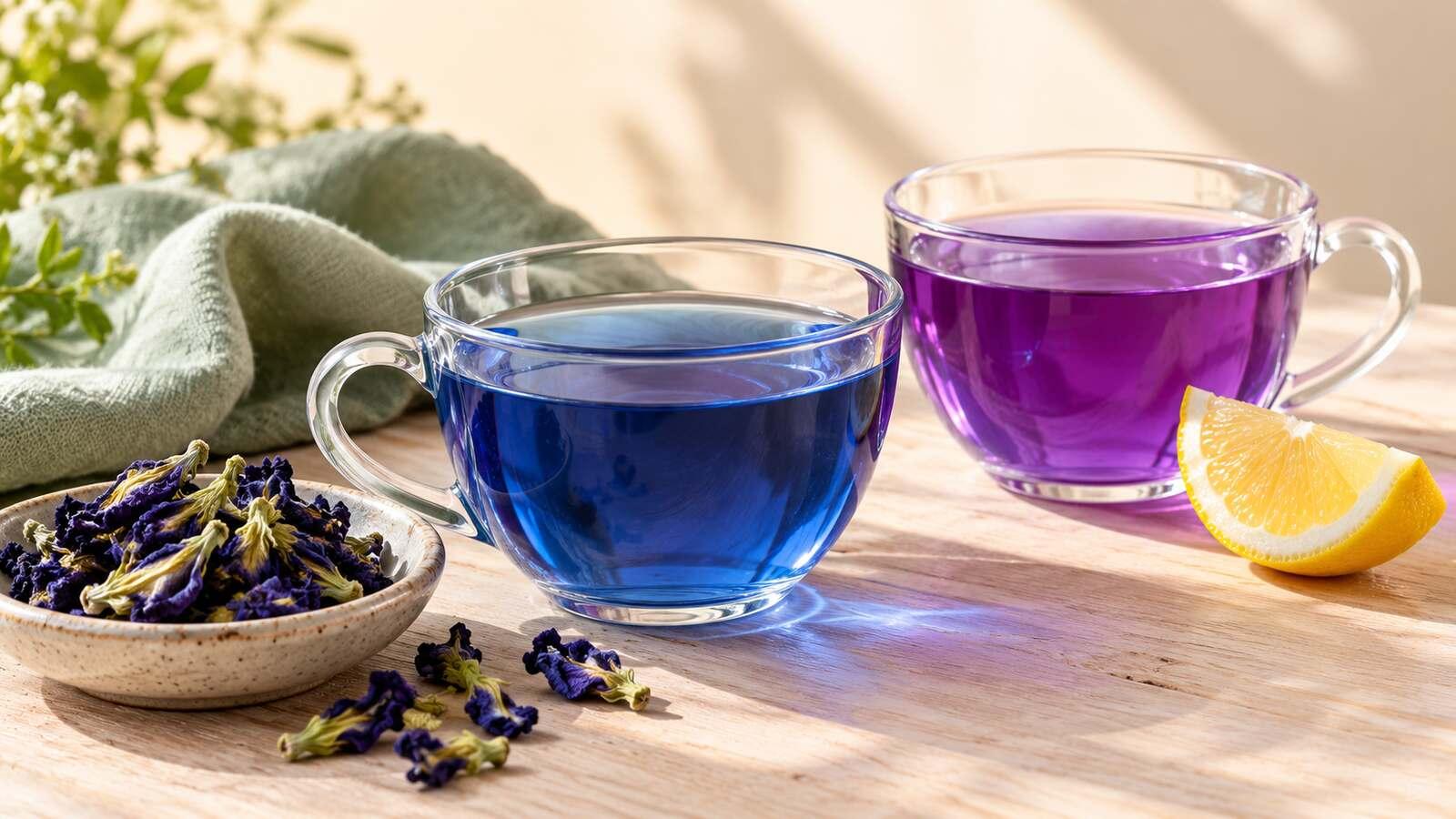
Butterfly Pea Tea Recipe: Plain, Lemon, Hot and Iced
Make butterfly pea flower tea plain, then add lemon to one matched cup to see the color shift. Use measured hot and iced recipes with an easy dilution table.
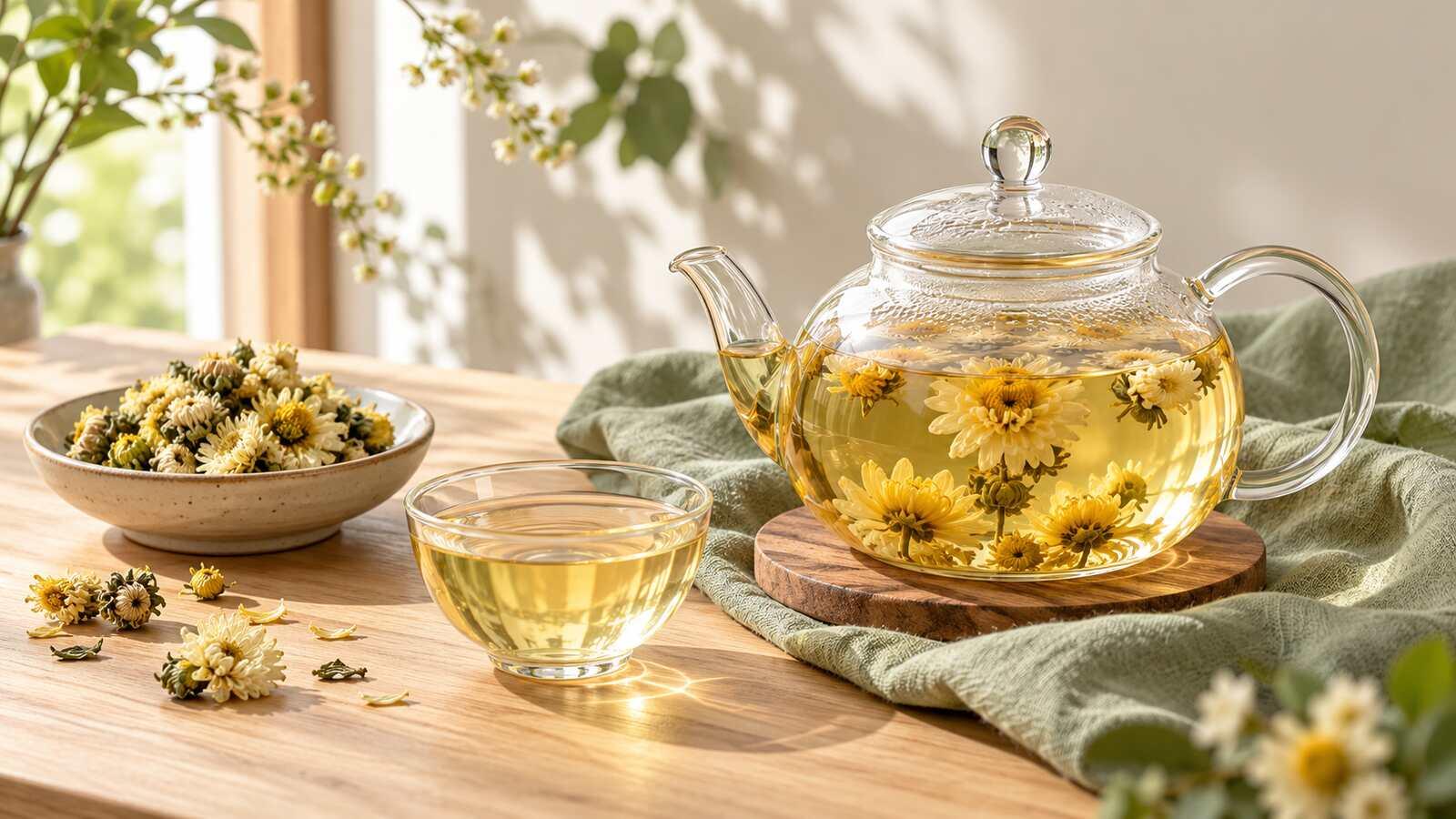
Chrysanthemum Tea: A Measured First Cup and Timing Guide
Brew chrysanthemum tea with a measured flower-to-water ratio, then use a simple strength worksheet to adjust steeping time, iced dilution, and blends.
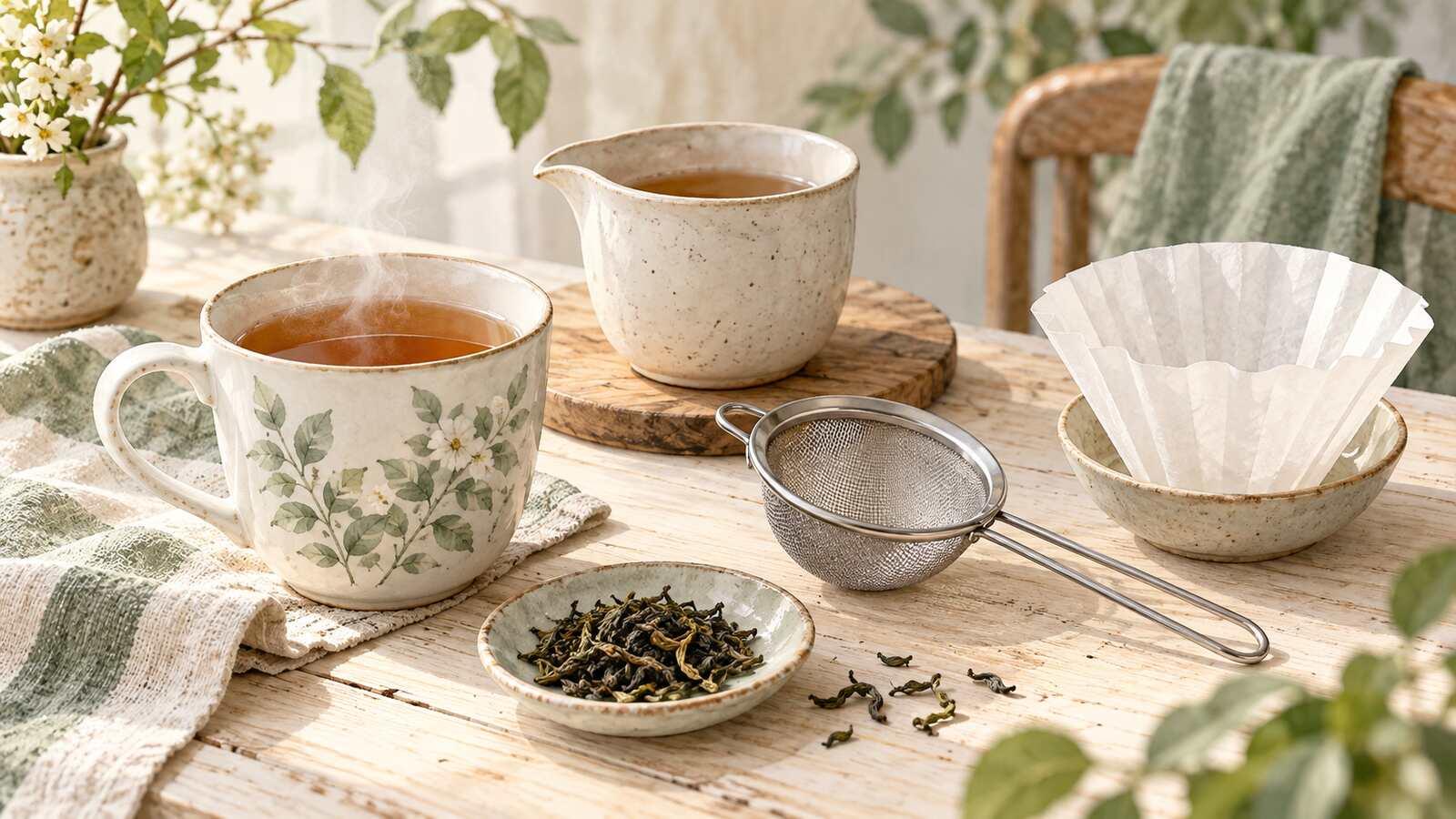
How to Brew Loose Leaf Tea Without a Strainer or Infuser
No tea strainer or infuser? Choose a loose-leaf method by leaf size and kitchen tools, then stop extraction on time with a sieve, filter, press or second cup.